.jpg)
What Does Your Lawn Actually Need?
From routine mowing to compacted soil, here’s how to work out which lawn care is worth considering.
Ask ten people how to look after a lawn and you’ll get ten different answers. Some swear by a bag of fertiliser twice a year. Others treat their lawn like a bowling green. Neither is necessarily wrong, but they may be solving very different problems. Here’s a level-by-level guide to what’s involved, what each step does and when your lawn may need it.
Here’s a level-by-level guide to what’s involved, what each step does and when your lawn may need it.
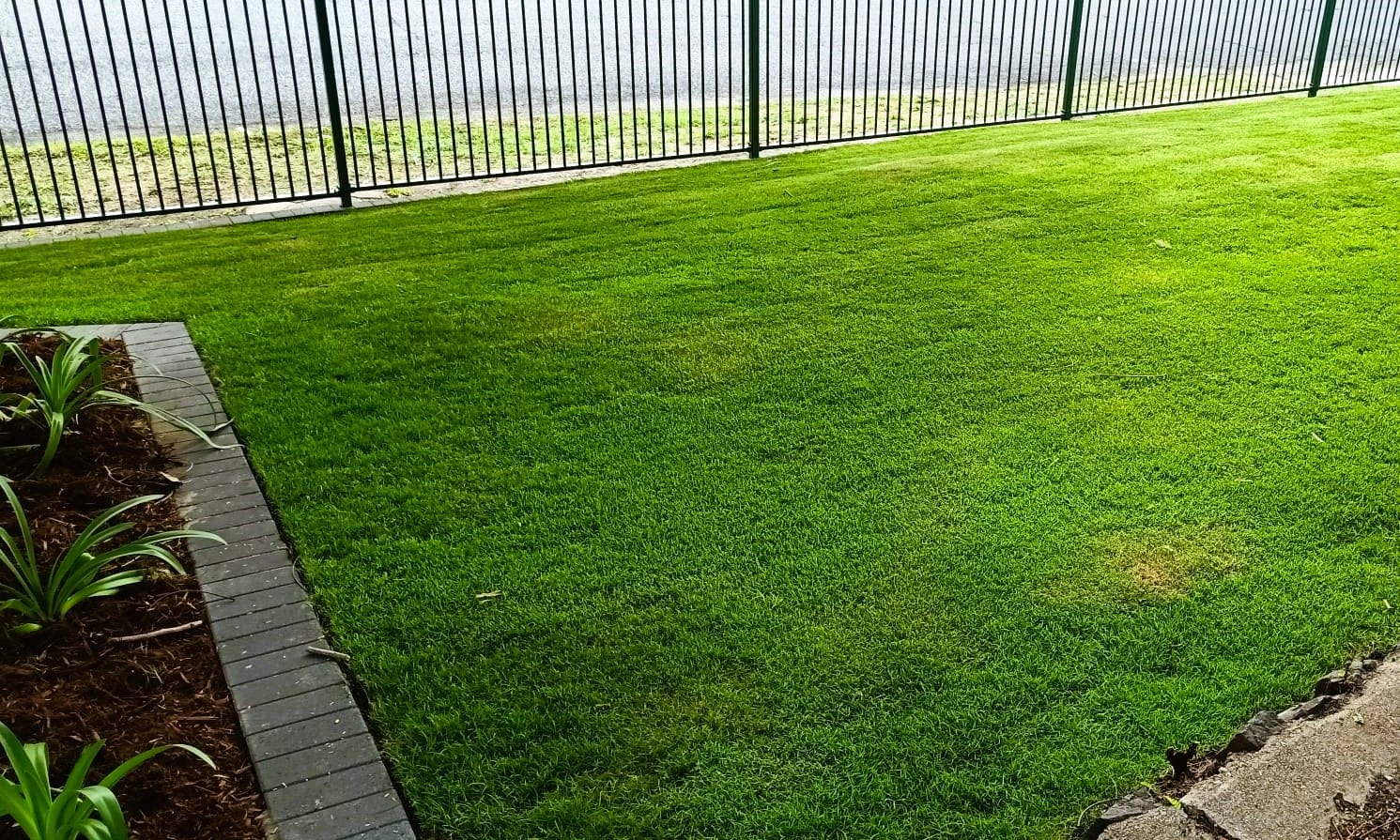
Level 1: The Basics
Mowing, fertilising and weed control
This is the foundation, and for many lawns it’s all that’s needed.
- Mowing at the right height: Scalping a lawn is one of the most common ways to damage it. Leaving the grass at a suitable height helps shade the soil, support deeper roots and reduce stress.
- Fertilising: Lawns need nutrients to maintain healthy colour and density and to recover from wear. The right fertiliser and timing will depend on the lawn variety, season and growing conditions.
- Weed control: A selective herbicide can remove certain broadleaf weeds without harming the lawn. The product matters because some lawn varieties are sensitive to particular chemicals. Using the wrong one can do more harm than the weeds themselves.
If your lawn is healthy, level, drains well and simply needs to look tidy, this level may be all you ever need.
Level 2: Regular Lawn Maintenance
Aeration and topdressing
Over time, soil can become compacted by foot traffic, mowing, children, pets and rain. Compacted soil makes it harder for water, air and nutrients to reach the root zone. Water may run off instead of soaking in, roots may remain shallow and fertiliser may be less effective.
- Aeration opens the soil by creating small holes, allowing air, water and nutrients to reach the roots more easily. It can make a noticeable difference to lawns that receive plenty of use or are showing early signs of compaction.
- Topdressing involves spreading a thin layer of suitable soil or a sand-and-soil mixture over the lawn. It can smooth minor bumps, support soil structure, encourage the lawn to thicken and improve resilience.
Together, aeration and topdressing can be an effective upgrade for a lawn that is generally sound but not thriving.
If your lawn is thin, patchy, uneven or struggling despite regular mowing and fertilising, this may be the next level to consider.
However, these treatments aren’t automatically needed every year. The lawn’s condition, soil and drainage should be assessed first.
Level 3: Coring
Going deeper when the soil needs it
Coring, also known as hollow-tine aeration, is a more intensive form of aeration.
Standard spike aeration creates holes by pushing into the soil. Coring physically removes small plugs of soil, helping to relieve more significant compaction and create space for air, water and nutrients to move into the root zone.
Coring may be worth considering when:
- Water pools on or runs off the surface
- The lawn feels hard underfoot
- A screwdriver is difficult to push into the soil
- The grass is thin in heavily used areas
- Fertilising and watering aren’t producing the expected results
- Compacted soil is restricting healthy root growth
Pooling water can also indicate a drainage or irrigation problem, so it’s important to identify the cause before deciding on a treatment.
Coring is commonly followed by topdressing and, where appropriate, fertilising or other recovery treatments. Timing matters. It is generally best carried out while the lawn is actively growing so it can recover and fill in more quickly.
Level 4: Full Turf Management
Irrigation, renovation and a greenkeeper’s eye
At the top end, you stop treating individual symptoms and start managing the lawn as a complete system.
That may mean looking at:
- Irrigation: Poorly planned or incorrectly adjusted watering can cause more lawn problems than many people realise. Overwatering, underwatering, dry patches, wet areas and wasted water can all affect lawn health. A properly designed and calibrated system delivers the right amount of water to the right places.
- Soil health: Testing and assessing the soil can help identify underlying issues rather than relying on guesswork or repeatedly applying products that may not address the cause.
- Renovation: This may include levelling, managing thatch, repairing worn areas or re-turfing sections that can no longer recover through routine care.
- A long-term plan: Instead of relying on isolated treatments, a lawn-care program considers seasonal growth, watering, nutrition, mowing and any ongoing issues throughout the year.
Full turf management doesn’t necessarily mean replacing the entire lawn. In many cases, the existing lawn can be improved once the real cause of the problem has been identified.
So, What Does Your Lawn Actually Need?
Here’s the honest answer: most lawns don’t need Level 4, and plenty don’t need Level 3.
The right level depends on:
- What you want from it: A neat, green lawn for the family is a different goal from a highly manicured showpiece.
- How it’s used: Children, pets, regular foot traffic and outdoor activities can compact the soil and increase wear.
- Its current condition: A healthy lawn needs to be maintained. A struggling lawn needs the cause diagnosed.
- Its growing environment: Sunlight, shade, soil, drainage and irrigation all influence how well a lawn performs.
Throwing more fertiliser at a compaction, irrigation or drainage problem won’t fix it. Finding the cause first can save money, reduce unnecessary treatments and produce a better long-term result.
If you’re not sure where your lawn sits, that’s a reasonable place to start.
Meet Jarrod
Diagnosing what a lawn really needs takes experience, and that’s where our Head of Gardening, Jarrod, comes in.
Jarrod is a qualified greenkeeper and irrigation specialist with more than 20 years of experience in the industry. He has managed turf in environments where the expected standard is far higher than the average backyard.
That experience helps him recognise what a healthy lawn should look and feel like—and identify what may be causing the problem when it doesn’t.
Jarrod can assist with:
- Lawn assessments and straightforward recommendations, including telling you when a treatment isn’t necessary
- Aeration, coring and topdressing
- Irrigation checks, repairs and setup
- Ongoing lawn-care programs suited to your lawn, priorities and budget
Get a Recommendation for Your Lawn
Not sure whether your lawn needs fertilising, aeration or a more complete renovation?
Not sure what your lawn needs? Get in touch with Whole Yards and tell us what you’ve noticed. We can help you work out the next step.
Care • Create • Cultivate
Leave a Comment