.jpg)
Sun, Shade and Your Lawn: Choosing the Right Grass for Your Brisbane Yard
Struggling with a lawn that never seems to thrive? The amount of sun and shade your yard receives may be the deciding factor.
If you’ve ever had a patch of lawn that just won’t thrive, no matter how much you fertilise, water or fuss over it, there’s a good chance the problem isn’t your care—it’s the grass itself.
Every grass type has its own light requirements, and planting the wrong one in the wrong spot is one of the most common reasons lawns struggle.
Here’s a plain-English guide to how much light the most common lawn grasses need and how to match the grass to your yard.
Why Light Matters So Much
Grass gets its energy from sunlight. Too little light and the lawn thins out, turns spindly, weeds and moss move in, and it becomes slow to recover from wear. No amount of fertiliser can fully make up for a lack of light.
This is especially important in Brisbane, where warm-season grasses can grow strongly in suitable conditions but shaded sections may still struggle.
Not all shade is equal, either:
- Full sun: Direct sunlight for most of the day—roughly six hours or more.
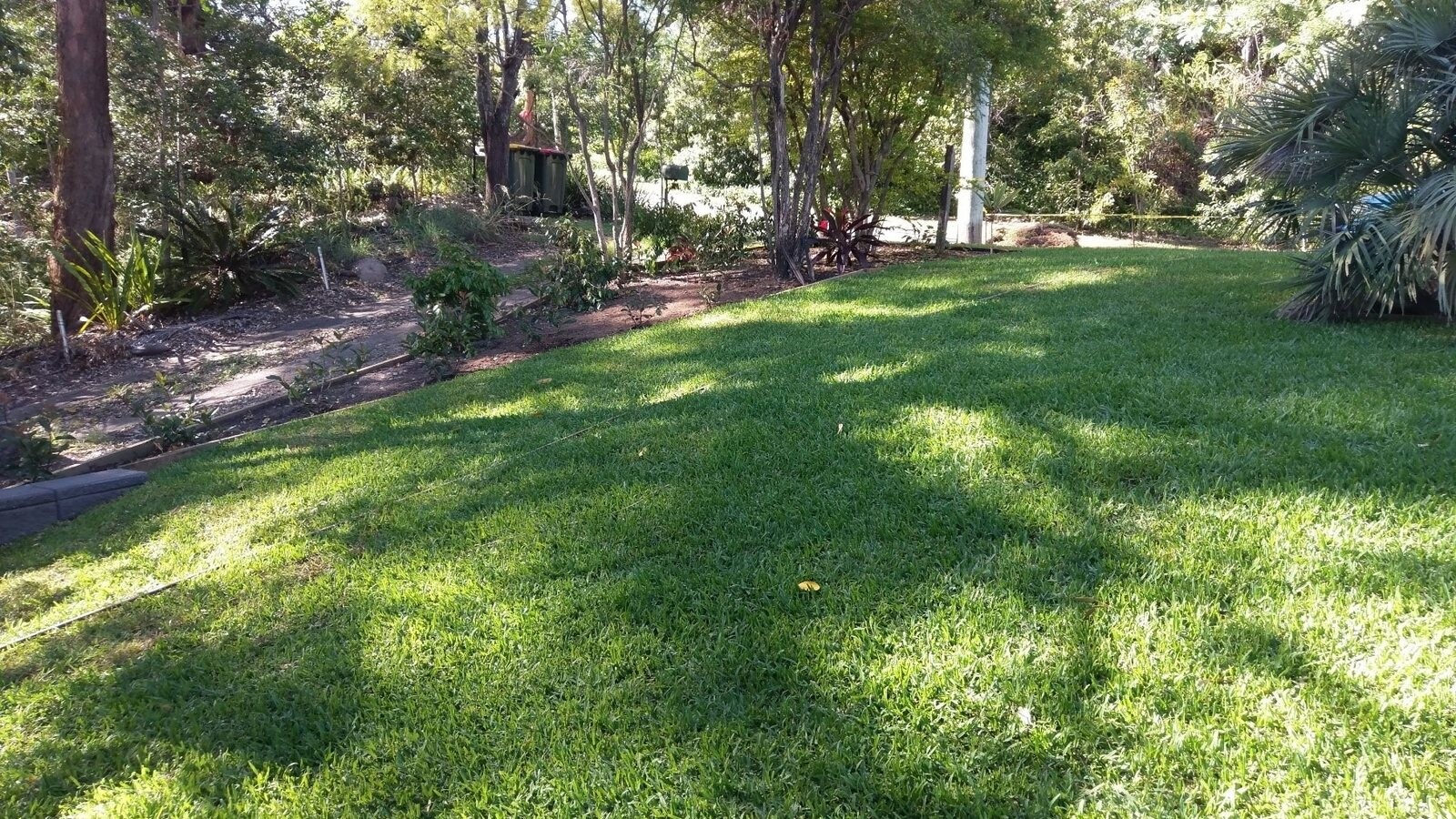
- Partial shade or dappled light: Filtered light through trees, or sun for only part of the day.
- Heavy shade: Little direct sunlight, such as the south side of a house or beneath dense trees.
Light conditions also change with the seasons. A spot that’s sunny in summer can be shaded for much of winter when the sun sits lower, and that’s often when shade-affected lawns really struggle.
The Common Grass Types
The figures below are general guides. Individual varieties within each grass type can differ, so treat them as a starting point rather than a guarantee.
Couch — Bermuda Grass
Light needs: Full sun, generally six to eight hours or more.
Good for: Sports fields, active lawns and open, sunny yards.
Watch out for: It performs poorly in shade and thins out quickly when light levels drop. If your yard is shaded, couch is usually not the right choice.
Kikuyu
Light needs: Prefers full sun, with some tolerance for partial shade.
Good for: Tough, fast-growing lawns that need to recover quickly from wear.
Watch out for: It’s vigorous and can creep into garden beds. It also doesn’t cope well with heavy shade.
Buffalo — Including Sir Walter, Palmetto and Similar Varieties
Light needs: Full sun to partial shade. It’s generally one of the most shade-tolerant common warm-season lawns, although it still needs reasonable light.
Good for: Family yards and backyards with trees, buildings or fences casting shade.
Watch out for: Even shade-tolerant buffalo will thin out in deep, constant shade. Some varieties handle shade better than others, so the specific variety matters.
Zoysia
Light needs: Full sun to moderate shade, depending on the variety.
Good for: Creating a fine, dense and manicured appearance with good drought tolerance.
Watch out for: It can be slow to establish and recover, so it may be less forgiving in areas with heavy wear.
.jpg "Established backyard lawn growing in mixed sunlight and shade")
Matching Grass to Your Yard
Mostly Full Sun
Almost any of the grass types above may work, so the decision comes down to how you use your lawn.
Couch suits active, sunny lawns, kikuyu is tough and fast to recover, and zoysia provides a fine, refined finish.
A Mix of Sun and Shade
Buffalo is usually the go-to option. It can handle the range of conditions that most real backyards throw at it better than many other common lawn types.
However, the amount of shade still matters. A lawn receiving several hours of direct sunlight is very different from one sitting beneath dense trees or beside a building all day.
Heavy Shade
Be realistic. In deep, constant shade, no lawn grass will perform particularly well.
Rather than continually fighting the conditions, it’s often smarter to use groundcovers, mulch, shade-loving plants or paving in those areas and keep the lawn where it can thrive.
Improving the Light You’ve Got
Sometimes the answer isn’t changing the grass but improving the conditions around it.
Prune or Thin Trees
Raising the canopy or thinning dense growth can allow a surprising amount of additional light to reach the lawn.
Deal With Competition
Tree roots take water and nutrients as well as blocking light, so lawns beneath trees often struggle on several fronts.
Mow a Little Higher in Shade
Longer grass blades give the lawn more leaf area to capture the available light.
Adjust Your Lawn Care
Shaded lawns often lose moisture more slowly and generally need less fertiliser than sunny lawns. However, check the soil before watering because tree roots can still create dry conditions.
Grass growing in shade also recovers more slowly from wear, so heavily used sections may need additional protection.
Getting It Right the First Time
Choosing a grass is a long-term decision, and replacing a lawn that never suited the site is an expensive way to learn.
Before laying anything, it’s worth mapping how much sun each part of your yard receives in both summer and winter and choosing accordingly.
This is where experience makes a difference. Jarrod, our Head of Gardening, is a greenkeeper with more than 20 years of turf experience. He can look at your yard, read the light, assess what’s already growing and tell you what will actually work—or whether an existing lawn can be saved by changing how it’s managed rather than replacing it.
Not Sure What’s Right for Your Yard?
Whether you’re planning a new lawn, replacing a struggling one or wondering why one corner never looks right, contact the Whole Yards team and we’ll help you find the right fit.
Care • Create • Cultivate
Leave a Comment